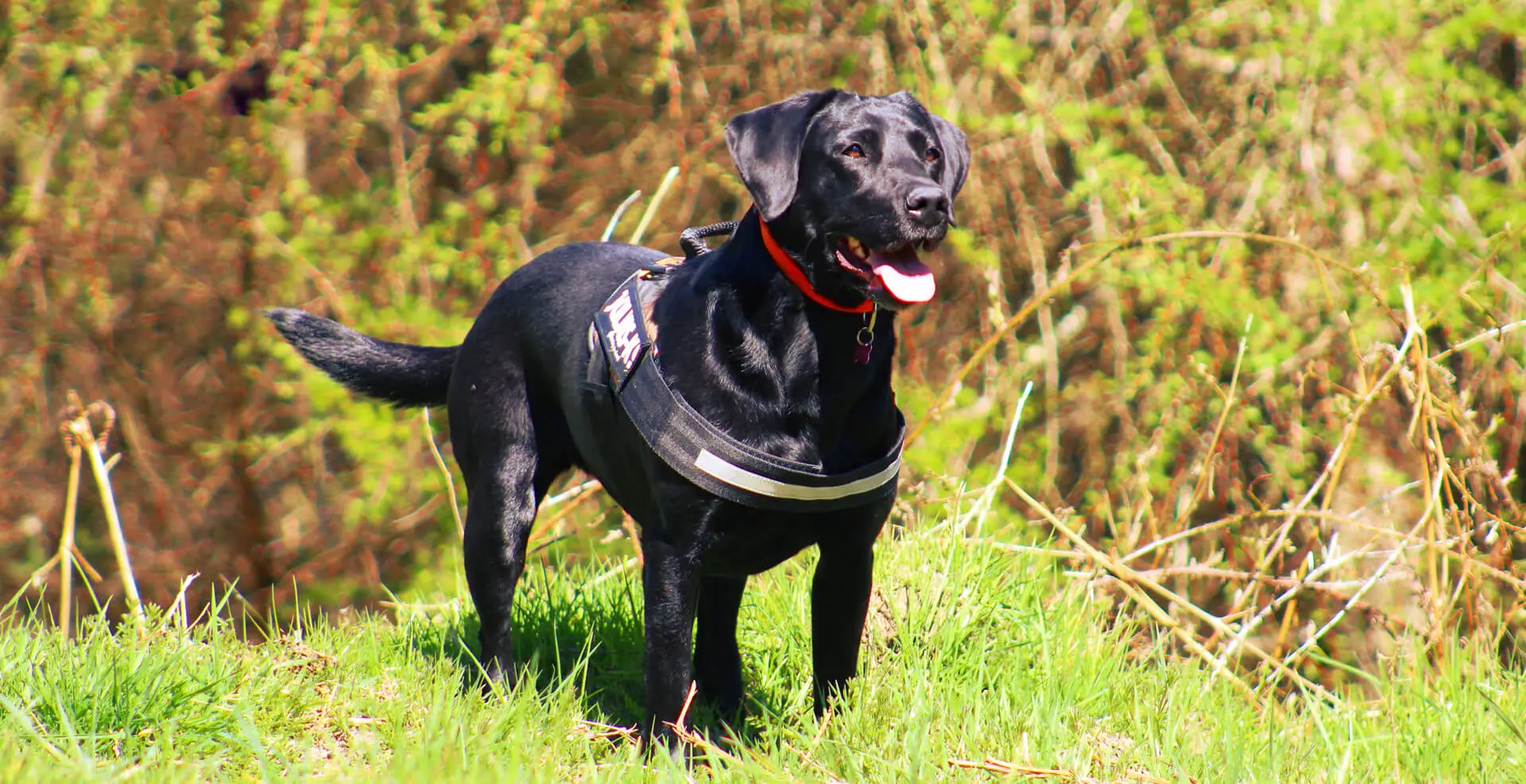
Wildlife Detection
Discover where species live, how many there are and other vital information. Our dogs detect data-rich animal signs to support your conservation research.
Passion for working dogs
"The truth is: the natural world is changing. And we are totally dependent on that world. It provides our food, water and air. It is the most precious thing we have and we need to defend it." Sir David Attenborough
Building upon techniques from drugs and explosives detection, we have pioneered ways to use dogs' remarkable sense of smell to detect the signs of animals - scat and other biological markers such as hair, urine, carcasses, nests, dens, ivory, skin and bone. The samples we identify can help researchers to answer some of the most pressing questions in conservation.
One of the biggest challenges for conservation researchers is the difficulty and cost of data collection. Detection dogs make quick work of this arduous task. Thanks to their finely trained noses, dogs can boost 40-fold the effectiveness and accuracy of your search without ever needing to disturb the animals.
Since dogs have no preconceptions about where the animal signs might be located, they work without bias, helping conservationists identify species across a much larger area.
What can a dog detect?
Dogs are capable of detecting anything that holds a scent. That includes pretty much everything. We've been in this business for 16 years and we have yet to encounter a scent that our dogs cannot handle. The possibilities are endless.
Perhaps more significantly, dogs are capable of working in any environment. We have trained dogs to work in arid desert conditions, hostile environments, wet jungles and damp British fog. Dogs can be trained to sniff out scents in heat, rain, mountains and wetlands, in avalanche conditions and in the aftermath of an earthquake - giving instant results with almost perfect accuracy.
Sound barking mad? It isn't. We're confident that our dogs can help you get a much fuller picture of your target species, all without seeing a hoof, feather or spot.
Trained dog teams include
Canine conservationists are key new combatants in the war against invasive plant species. We train dogs to nose out weeds where detection eludes the human eye.
Other Projects
Below are some of the projects that are currently underway.

The latest weapon in the war against invasive plant species.
Invasive plant species cost as much as £2 billion every year in Britain alone. The only way to cut this expense is to catch them before they spread.
That's where detection dogs come in.
Whereas humans often can't spot invasive plants until after they have taken over, dogs can scent the first infestation, alerting ecologists to noxious weeds before they choke the native ecosystem.
Trained to pinpoint the odour of a target plant species - imperceptible even to expert ecologists - dogs can identify the first colonists or the last survivors of a plant population that have resisted chemical treatment. Left unchecked, even the smallest fragment can quickly repopulate. Detection dogs are one of our best defences against that happening - boosting biosecurity and reducing the long-term eradication cost.
A 2010 study published in the Journal of Invasive Plant Science and Management found that dogs sniffed out twice the number of invasive plants that humans could detect visually.
A nose for natives
But it isn't only bio-security where working dogs excel. We can train dogs to identify any number of rare and protected species, including those that are under threat due to unsustainable harvesting for the traditional medicine markets.
Other work for the dogs includes detecting organic imports at air and seaports and tracking plant-eating insects and tree diseases.
Have a question about our plant conservation service? Get in touch to find out more.

How we can help
Hiring us is not a leap of faith. We have a proven track record for helping conservationists collect more and better samples and a nose for what makes a great working dog. Contact us today, and let's work together to find that elusive data.
We work with animals every day and can provide a fully trained dog and master handler to detect a particular scent. We can train a dog if your team is already experienced in handling working detection dogs. Or we can train the whole team from scratch - rigorously, with consults and refresher training where needed.
We're also happy to oblige our clients with consultancy where required. For advice on dog section set up, centre evaluation, handler assessment and troubleshooting, please get in touch using our contact page.
Our services